Recognition Over Activation
Most platforms mistake silence for disengagement, yet we suspected we were measuring our own interface constraints instead of actual user preference.
TL;DR

Overview
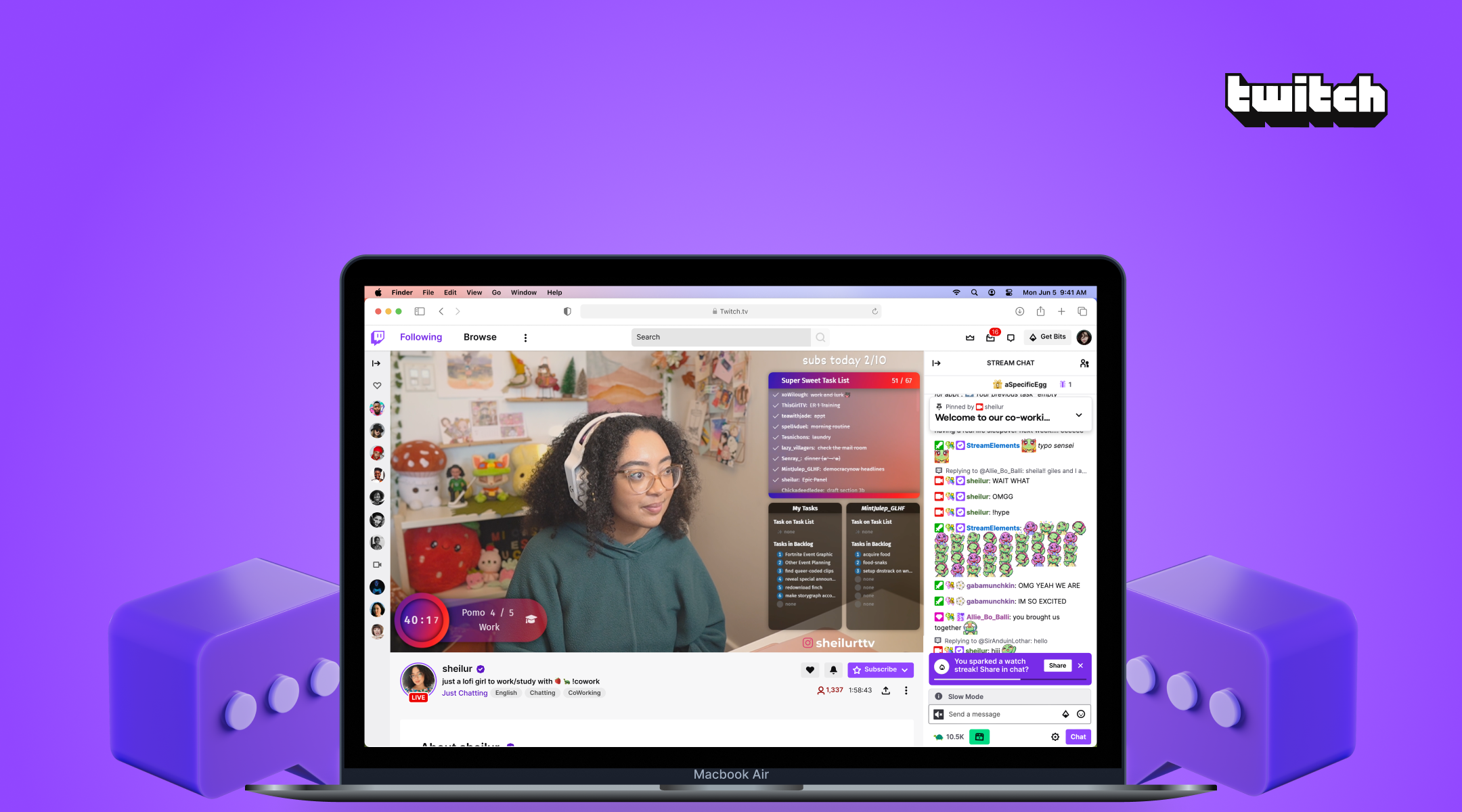
Retention was stagnant, yet the value proposition remained sound. While Watch Streaks surfaced viewing milestones to recognize user affinity, the initial strategy relied on public-facing mechanics. This design defaulted to The Visibility Assumption, the belief that engagement requires public performance and visible social signals. My analysis revealed that lurkers were actually the second most loyal segment despite having the lowest interaction rates. They were not disinterested but underserved by a platform that only offered spotlight participation. I proposed a pivot to private recognition to unlock engagement from users who wanted to contribute without the social cost of public performance.
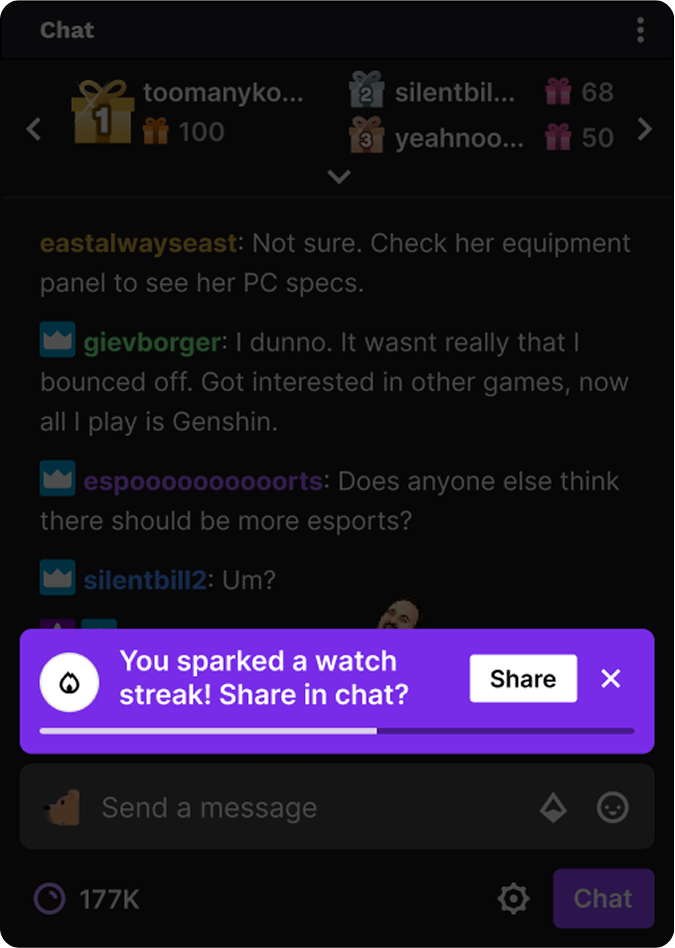

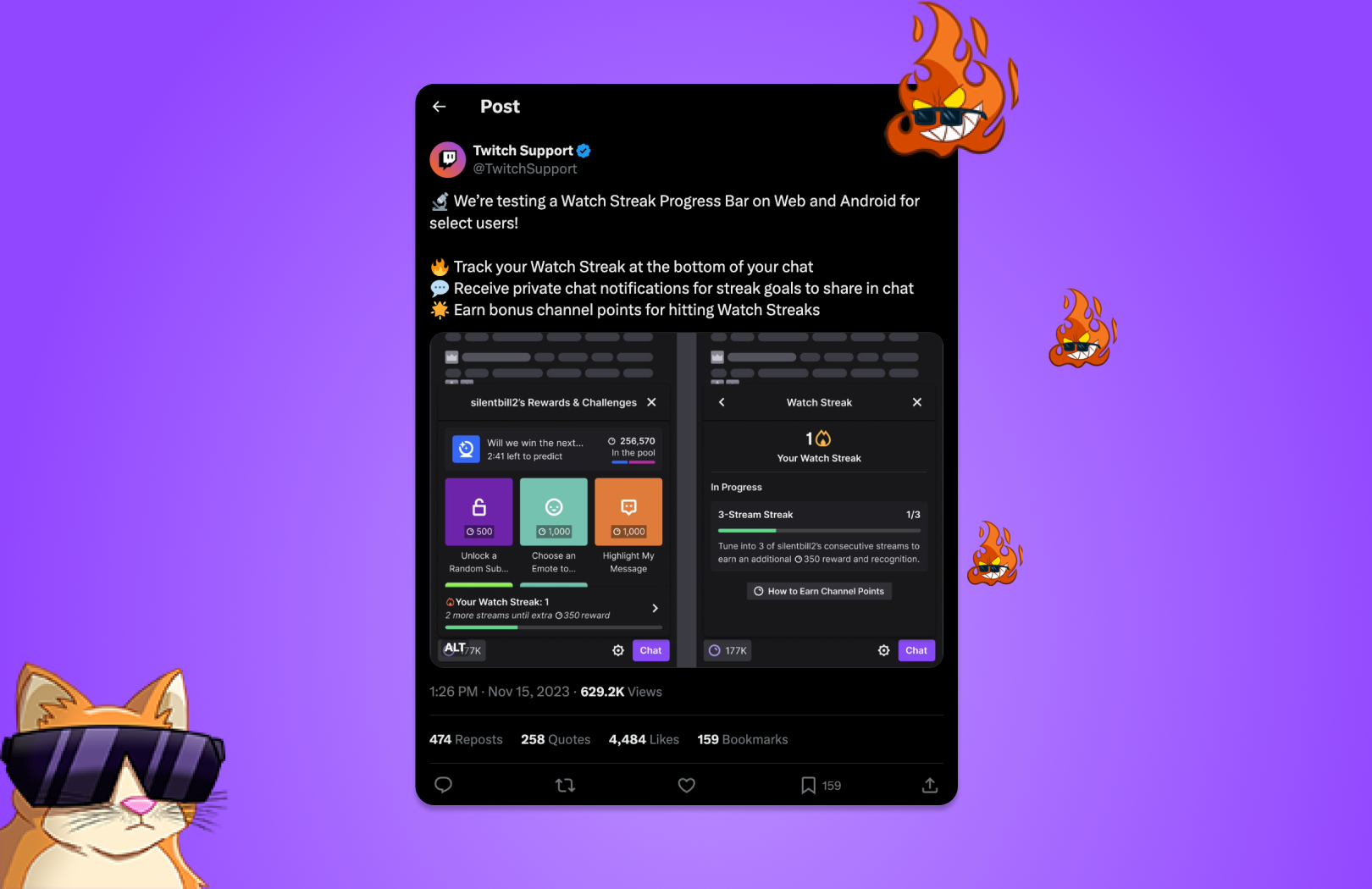
Finalized design that launched

Impact and Key Findings
- The Breakthrough: 54% of milestone activity came from the lurkers I advocated for, monetizing a segment the platform's architecture had structurally excluded
- Sustainable Growth: Achieved 1.75% FMP retention increase and 94% surge in milestone sharing by aligning recognition systems with actual participation styles rather than forcing behavior change
- The Insight: User silence was interface-driven behavior rooted in Social Facilitation Theory. The presence of an audience inhibited participation for the majority of users. We were measuring our own design constraints, not users' actual capacity for engagement.

The Problem
Measuring Constraints, Not Capacity
Retention was tracked through platform visits and measured engagement through chat activity. This rendered quiet users invisible in product metrics despite their consistent return behavior. The approach was safe because it targeted users already generating visible signals, but it ignored whether silence reflected preference or structural barriers. I designed an A/B experiment to test whether lurkers would engage if recognition didn't require an audience. By isolating visibility as the variable, I sought to understand if we were measuring user preference or measuring our own interface constraints.

A small But Mighty Team
As sole designer, I led end-to-end design and shipped Watch Streaks in 4 months. I built confidence in the feature's scalability by shifting the team's focus from active chatters to lurkers, reframing Watch Streaks from an incremental win to a strategic retention lever.
- 4 Engineers
- 1 Product Manager
- 1 Data Analyst
- 1 UX Writer
- 1 Design Systems Designer
- 1 Technical Program Manager
Behavioral Design Translation
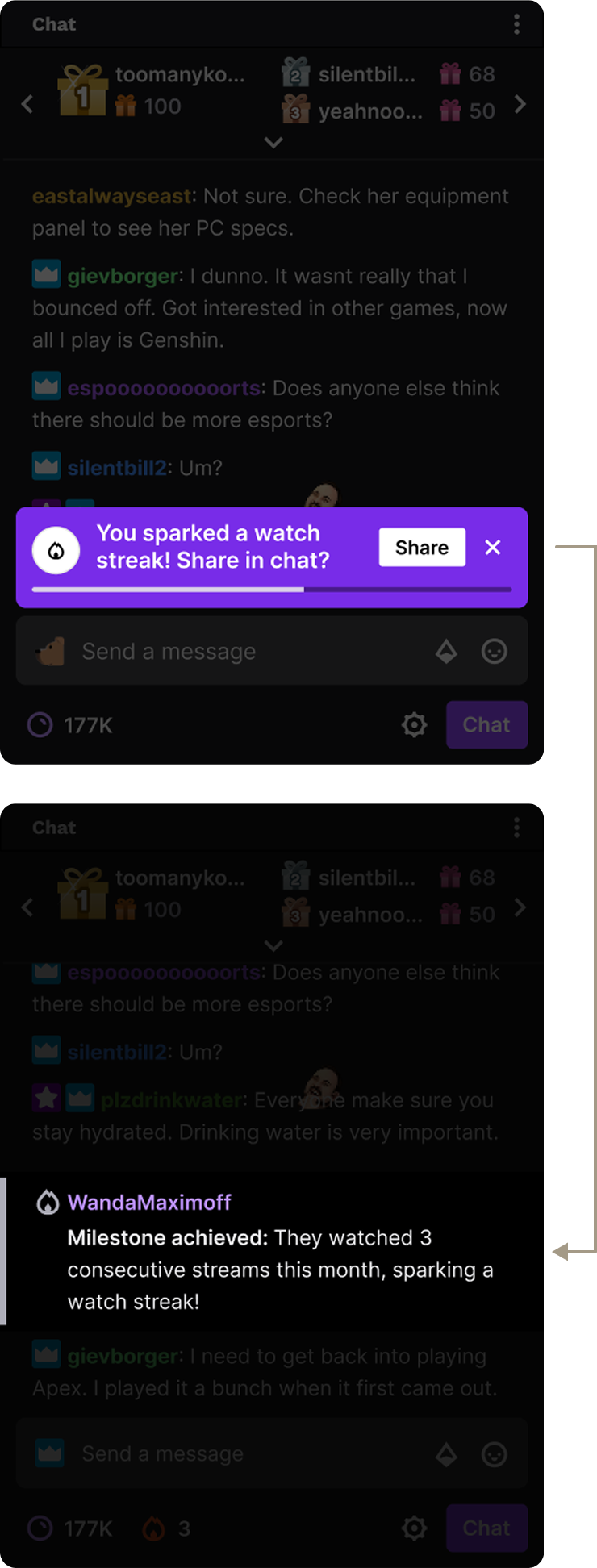
Finalized designs for public sharing

Testing Visibility As The Variable
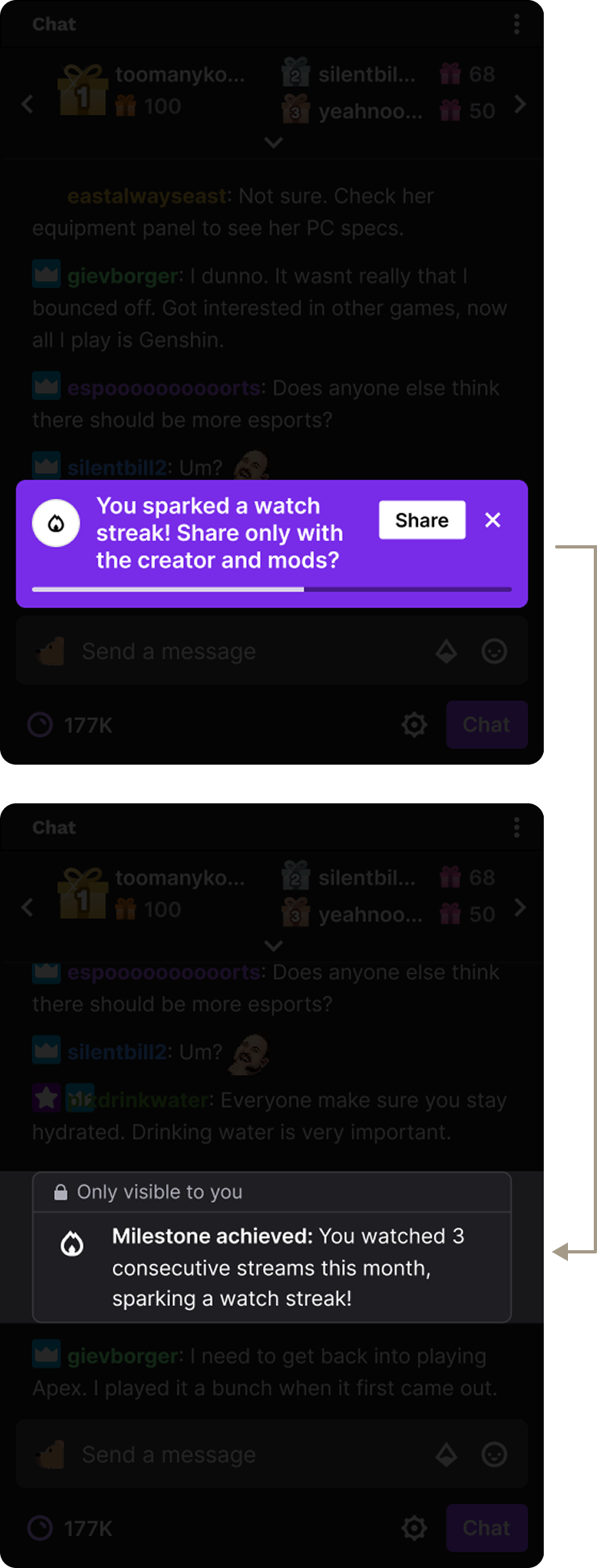
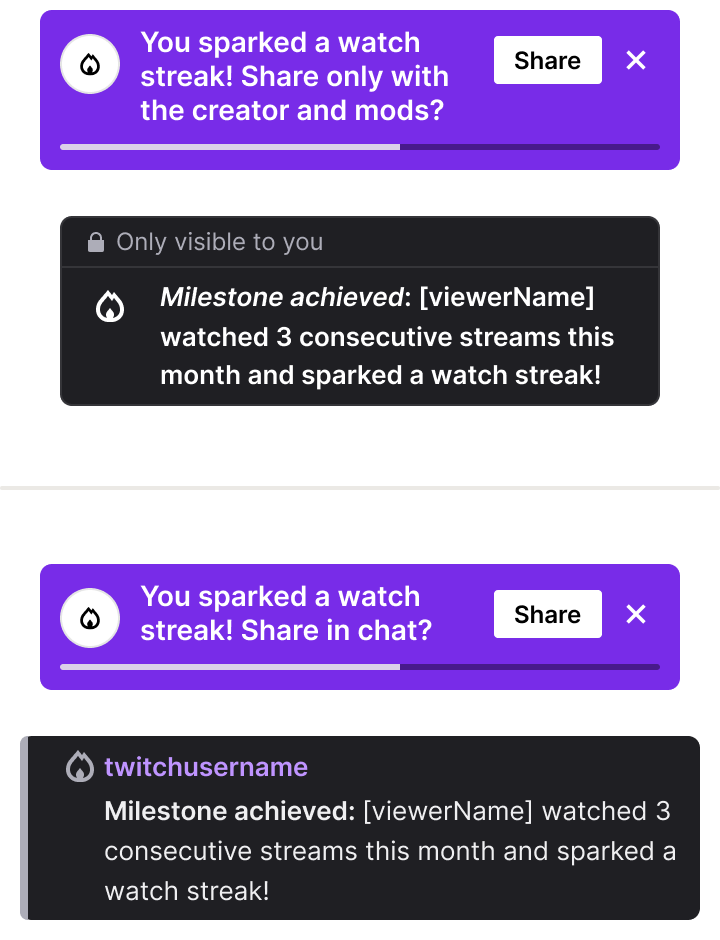
Social Facilitation Theory explains how the presence of an audience alters individual behavior. I hypothesized that lurker silence was a response to being observed rather than a lack of interest. To validate this, I architected two distinct interaction models that isolated visibility. The public path broadcast milestones to the chat and maintained Twitch’s standard performance model. The private path routed recognition exclusively to the streamer and removed audience exposure while keeping all other mechanics identical. This design framework allowed us to measure how removing the spotlight directly restored user agency for our silent segments.

When Limitations Clarify The Experiment
Technical constraints prevented us from offering user-selected privacy at launch. I reframed this limitation as a strategic opportunity to eliminate self-selection bias and isolate the impact of visibility. By removing user choice, we ensured that engagement differences reflected the interface treatment itself rather than pre-existing preferences. This randomization created a pure experimental condition to measure the social cost of the spotlight. The technical limitation became our primary methodology.
Finalized designs for public sharing

Copywriting For Identity, Not Conversion
Language determines whether users perceive acknowledgment as personal validation or public performance. I developed a voice that validated silence as a legitimate form of participation rather than a problem to solve. Milestone messaging prioritized the relationship between viewer and creator over community-wide broadcasting. This strategy acknowledged consistent support without pressuring users to alter their participation style. It respected that lurkers are not inactive users awaiting activation but consistent contributors through presence. The copy reflected their existing identity rather than attempting to force a conversion into active chatters.

Milestone Progression For Sustained Retention
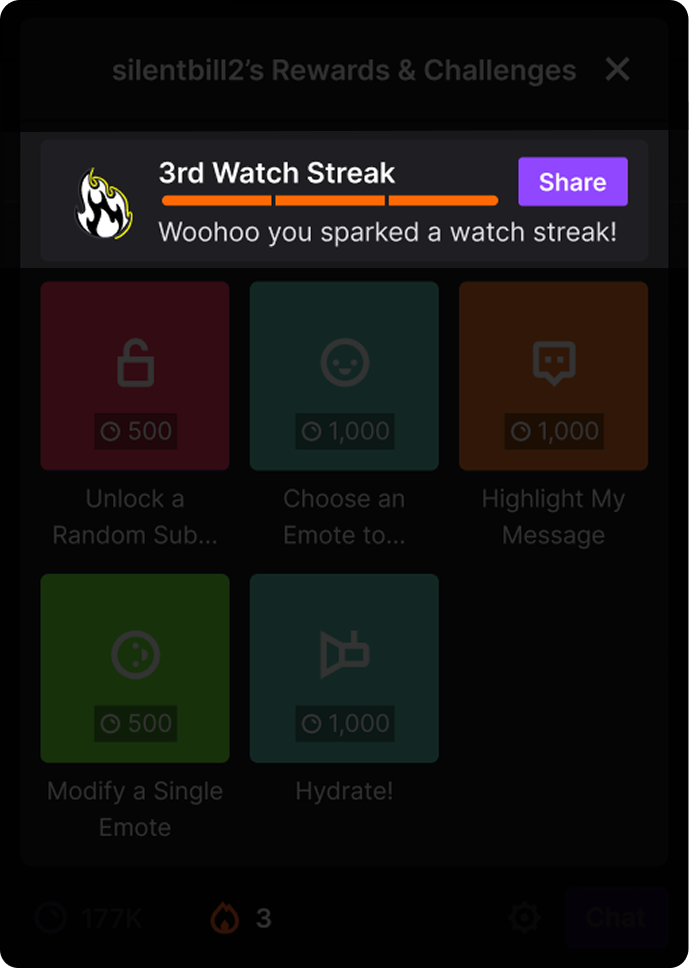
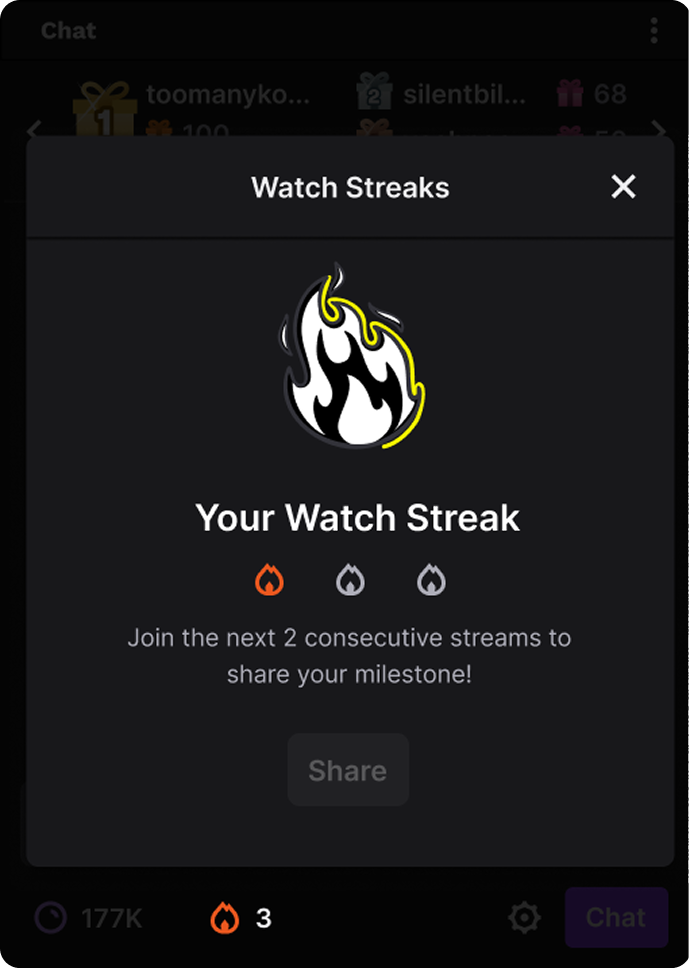
Variable reward structures sustain engagement more effectively than static recognition. I pitched milestone progression to ensure sustained retention because isolated touchpoints rarely drive lasting behavioral change. While early designs focused on initial achievements, I introduced escalating milestones to transform consistent viewing into a durable habit. I architected the progression framework to build psychological investment through incremental goals instead of treating recognition as a transactional event. This application of behavioral reinforcement principles converted initial interest into sustained participation patterns. The resulting structure moved Watch Streaks beyond mere acknowledgment into a system that actively cultivates loyalty.
IMPACT
1.75% FMP
User retention increase (Five-Minute-Play)
54%
Engagement Increase from Lurkers
94%
Increase in Milestone Shares
Validating Silent Engagement
The 54% engagement surge from lurkers yielded a fundamental insight regarding participation design. This segment was not bypassing engagement due to a lack of interest in creators but was instead navigating a platform that conflated connection with performance. Private recognition unlocked participation by de-coupling these distinct needs. Users sought to acknowledge their loyalty and support creators without the social cost of spotlight visibility. These results proved that silence was not a preference but a direct response to a singular participation model. When we architected recognition to respect diverse behavioral styles, engagement emerged immediately. We proved that the platform had been measuring its own architectural constraints rather than actual user motivation.
Reflection

Redefining Engagement Architecture
This project revealed that standard engagement models rely on the Performance Binary, the belief that value only exists in visible interaction. My research challenged that industry assumption by demonstrating that loyalty persists in silence when the interface permits it. I learned that future engagement architecture needs to move beyond broadcast-only models toward systems of tiered visibility. By de-coupling social connection from public performance, platforms can capture the latent value of their largest and most stable user segments. The insight I carried forward is that sustainable growth requires shifting from performance-gated participation to preference-centered ecosystems. We were designing for the loudest users when we should have been building for the most consistent ones.


“Building an adaptive future through deliberate insights”


Made and designed by nayeri
© 2026 All Rights Reserved

Recognition Over Activation
Most platforms mistake silence for disengagement, yet we suspected we were measuring our own interface constraints instead of actual user preference.
TL;DR
Overview
Retention was stagnant, yet the value proposition remained sound. While Watch Streaks surfaced viewing milestones to recognize user affinity, the initial strategy relied on public-facing mechanics. This design defaulted to The Visibility Assumption, the belief that engagement requires public performance and visible social signals. My analysis revealed that lurkers were actually the second most loyal segment despite having the lowest interaction rates. They were not disinterested but underserved by a platform that only offered spotlight participation. I proposed a pivot to private recognition to unlock engagement from users who wanted to contribute without the social cost of public performance.
Finalized design that launched

A small But Mighty Team
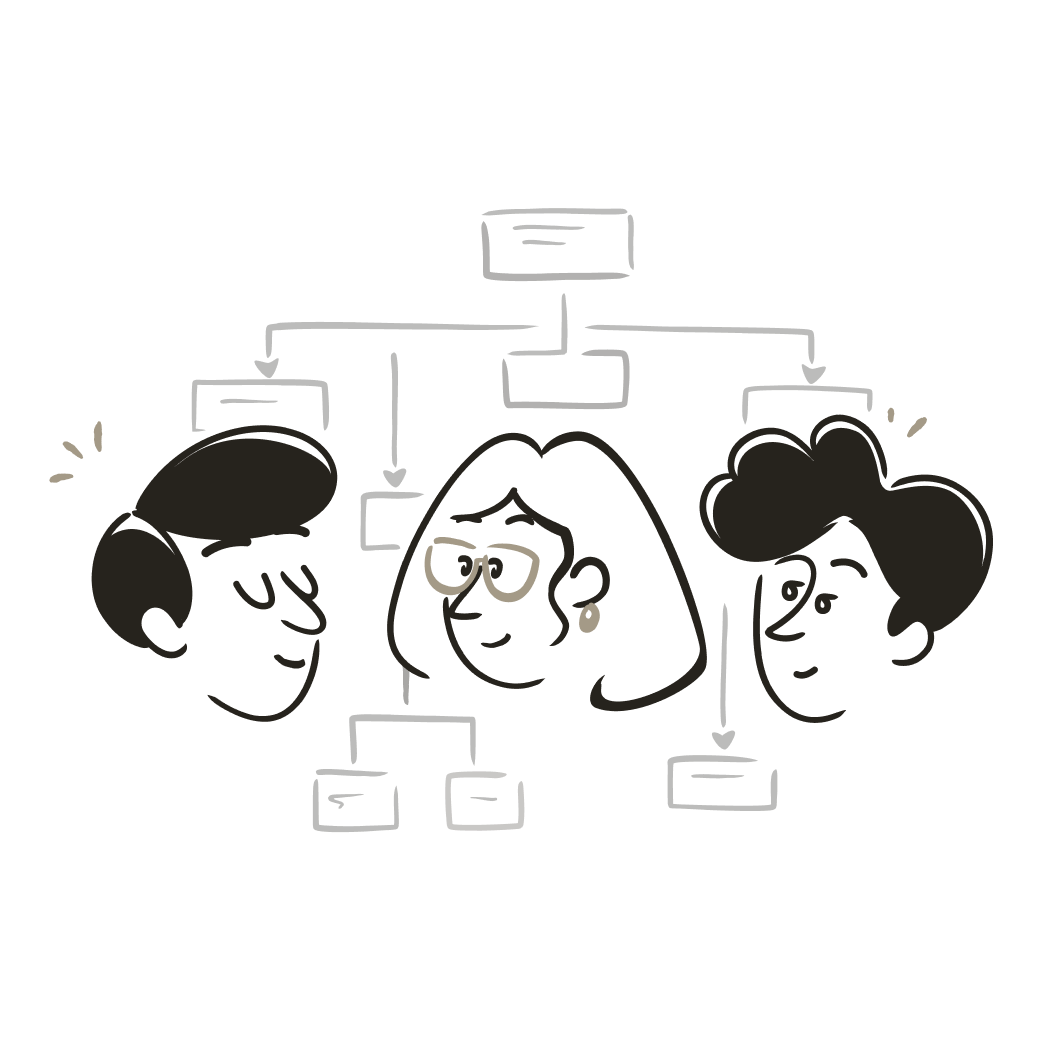
As sole designer, I led end-to-end design and shipped Watch Streaks in 4 months. I built confidence in the feature's scalability by shifting the team's focus from active chatters to lurkers, reframing Watch Streaks from an incremental win to a strategic retention lever.
- 4 Engineers
- 1 Product Manager
- 1 Data Analyst
- 1 UX Writer
- 1 Design Systems Designer
- 1 Technical Program Manager
Impact and Key Findings
- The Breakthrough: 54% of milestone activity came from the lurkers I advocated for, monetizing a segment the platform's architecture had structurally excluded
- Sustainable Growth: Achieved 1.75% FMP retention increase and 94% surge in milestone sharing by aligning recognition systems with actual participation styles rather than forcing behavior change
- The Insight: User silence was interface-driven behavior rooted in Social Facilitation Theory. The presence of an audience inhibited participation for the majority of users. We were measuring our own design constraints, not users' actual capacity for engagement.
The Problem
Measuring Constraints, Not Capacity
Retention was tracked through platform visits and measured engagement through chat activity. This rendered quiet users invisible in product metrics despite their consistent return behavior. The approach was safe because it targeted users already generating visible signals, but it ignored whether silence reflected preference or structural barriers. I designed an A/B experiment to test whether lurkers would engage if recognition didn't require an audience. By isolating visibility as the variable, I sought to understand if we were measuring user preference or measuring our own interface constraints.
Behavioral Design Translation
Finalized designs for public sharing
Finalized designs for priviate sharing
Testing Visibility As The Variable
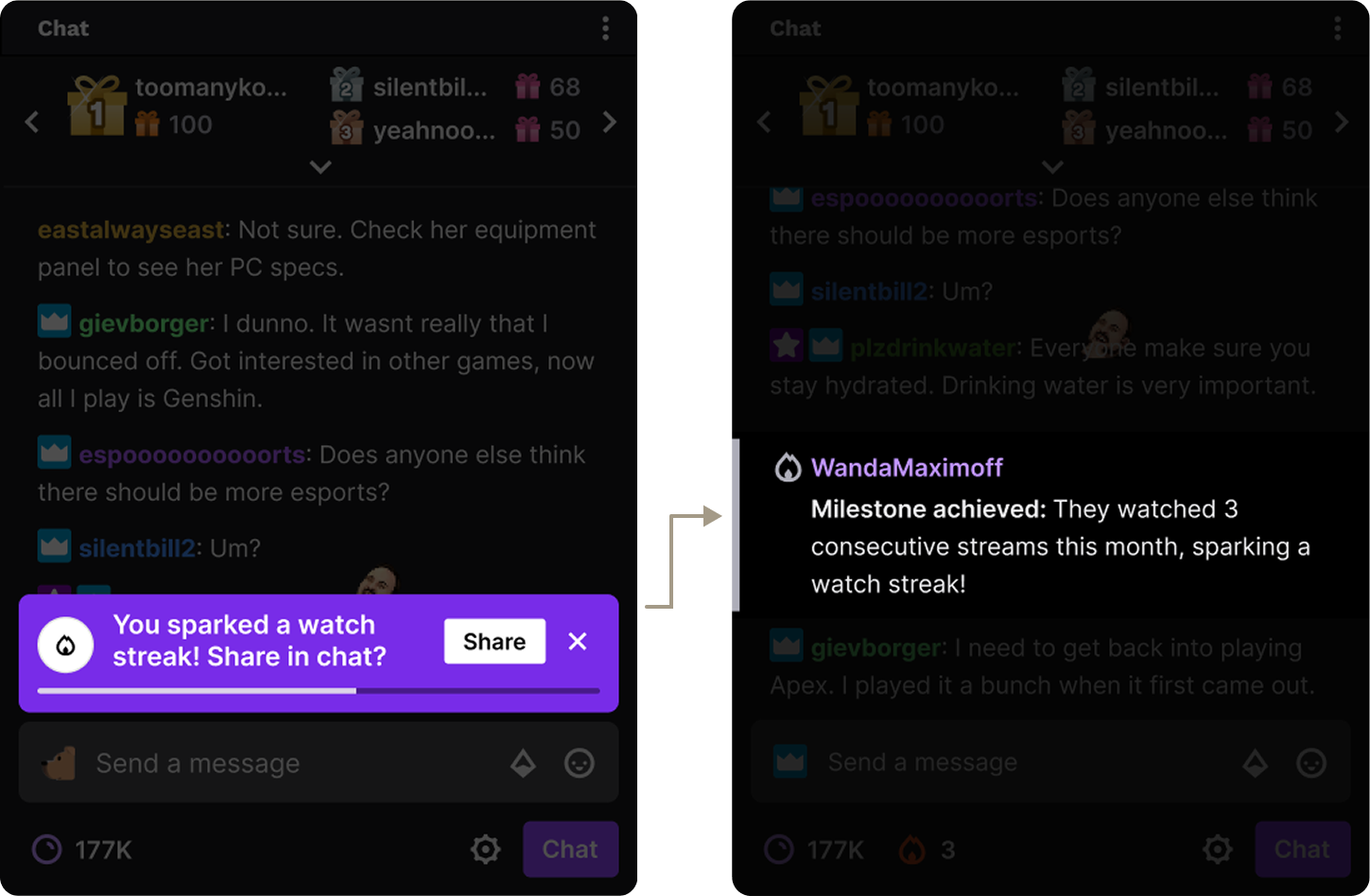
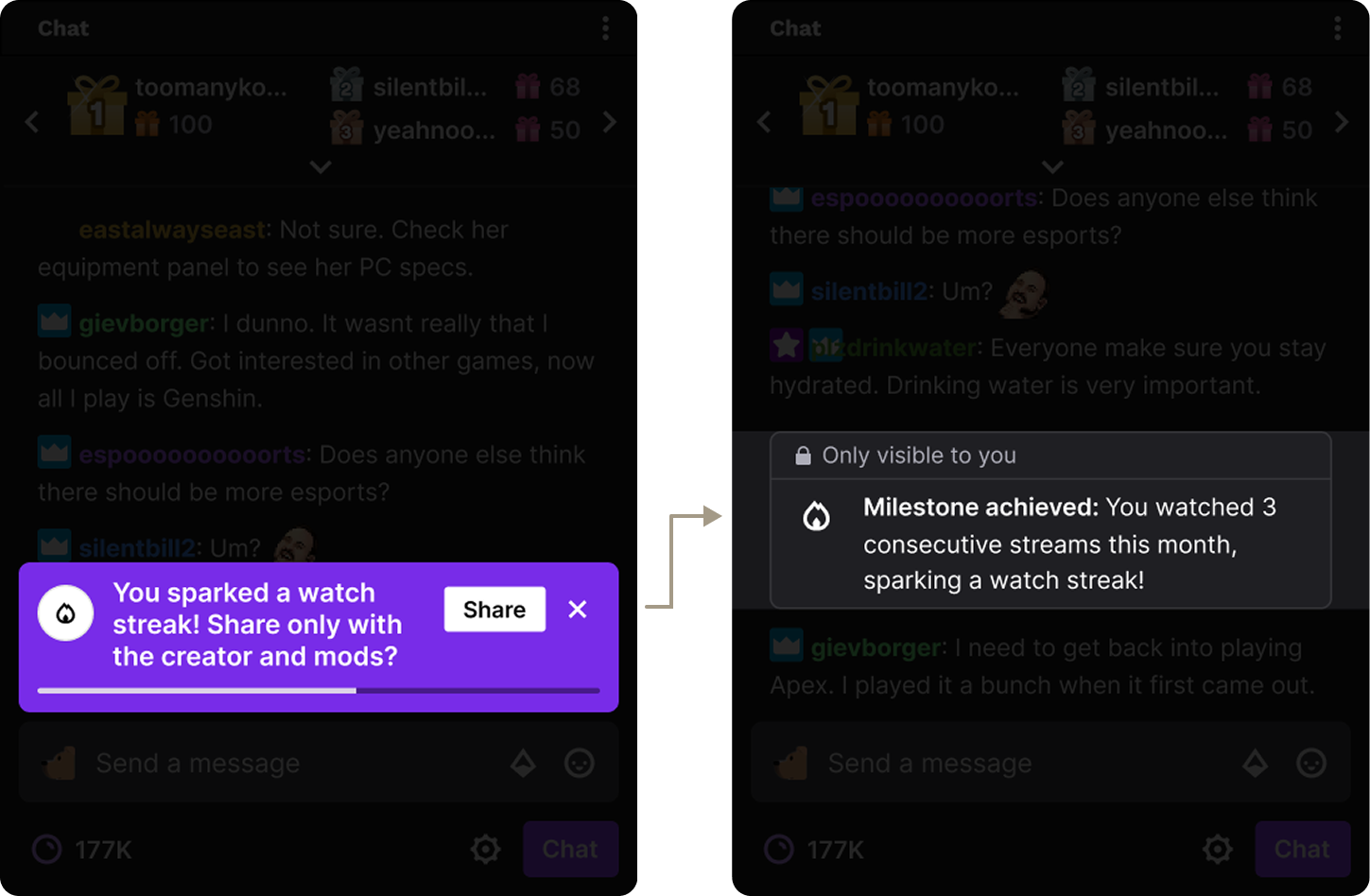
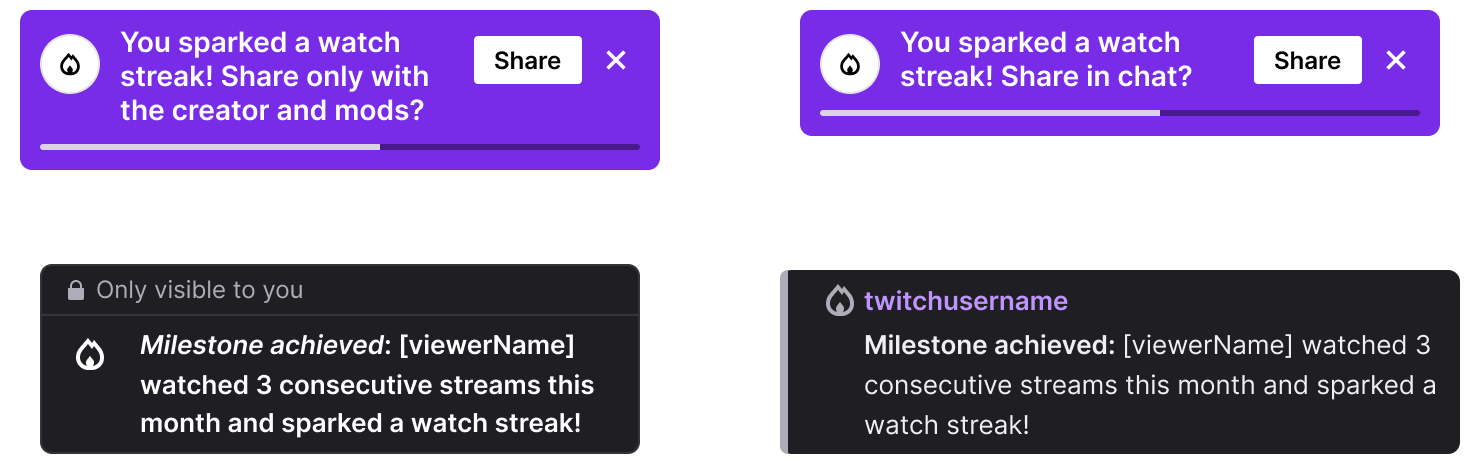
Social Facilitation Theory explains how the presence of an audience alters individual behavior. I hypothesized that lurker silence was a response to being observed rather than a lack of interest. To validate this, I architected two distinct interaction models that isolated visibility. The public path broadcast milestones to the chat and maintained Twitch’s standard performance model. The private path routed recognition exclusively to the streamer and removed audience exposure while keeping all other mechanics identical. This design framework allowed us to measure how removing the spotlight directly restored user agency for our silent segments.
When Limitations Clarify The Experiment
Technical constraints prevented us from offering user-selected privacy at launch. I reframed this limitation as a strategic opportunity to eliminate self-selection bias and isolate the impact of visibility. By removing user choice, we ensured that engagement differences reflected the interface treatment itself rather than pre-existing preferences. This randomization created a pure experimental condition to measure the social cost of the spotlight. The technical limitation became our primary methodology.
Copywriting For Identity, Not Conversion
Language determines whether users perceive acknowledgment as personal validation or public performance. I developed a voice that validated silence as a legitimate form of participation rather than a problem to solve. Milestone messaging prioritized the relationship between viewer and creator over community-wide broadcasting. This strategy acknowledged consistent support without pressuring users to alter their participation style. It respected that lurkers are not inactive users awaiting activation but consistent contributors through presence. The copy reflected their existing identity rather than attempting to force a conversion into active chatters.

Finalized designs for priviate sharing
Finalized designs for priviate sharing
Milestone Progression For Sustained Retention
Variable reward structures sustain engagement more effectively than static recognition. I pitched milestone progression to ensure sustained retention because isolated touchpoints rarely drive lasting behavioral change. While early designs focused on initial achievements, I introduced escalating milestones to transform consistent viewing into a durable habit. I architected the progression framework to build psychological investment through incremental goals instead of treating recognition as a transactional event. This application of behavioral reinforcement principles converted initial interest into sustained participation patterns. The resulting structure moved Watch Streaks beyond mere acknowledgment into a system that actively cultivates loyalty.
IMPACT
1.75% FMP
User retention increase (Five-Minute-Play)
54%
Engagement Increase from Lurkers
94%
Increase in Milestone Shares
Validating Silent Engagement
The 54% engagement surge from lurkers yielded a fundamental insight regarding participation design. This segment was not bypassing engagement due to a lack of interest in creators but was instead navigating a platform that conflated connection with performance. Private recognition unlocked participation by de-coupling these distinct needs. Users sought to acknowledge their loyalty and support creators without the social cost of spotlight visibility. These results proved that silence was not a preference but a direct response to a singular participation model. When we architected recognition to respect diverse behavioral styles, engagement emerged immediately. We proved that the platform had been measuring its own architectural constraints rather than actual user motivation.
Reflection
Redefining Engagement Architecture
This project revealed that standard engagement models rely on the Performance Binary, the belief that value only exists in visible interaction. My research challenged that industry assumption by demonstrating that loyalty persists in silence when the interface permits it. I learned that future engagement architecture needs to move beyond broadcast-only models toward systems of tiered visibility. By de-coupling social connection from public performance, platforms can capture the latent value of their largest and most stable user segments. The insight I carried forward is that sustainable growth requires shifting from performance-gated participation to preference-centered ecosystems. We were designing for the loudest users when we should have been building for the most consistent ones.

“Building an adaptive future through deliberate insights”

Made and designed by nayeri
© 2026 All Rights Reserved
Recognition Over Activation
Most platforms mistake silence for disengagement, yet we suspected we were measuring our own interface constraints instead of actual user preference.
TL;DR
Overview
Retention was stagnant, yet the value proposition remained sound. While Watch Streaks surfaced viewing milestones to recognize user affinity, the initial strategy relied on public-facing mechanics. This design defaulted to The Visibility Assumption, the belief that engagement requires public performance and visible social signals. My analysis revealed that lurkers were actually the second most loyal segment despite having the lowest interaction rates. They were not disinterested but underserved by a platform that only offered spotlight participation. I proposed a pivot to private recognition to unlock engagement from users who wanted to contribute without the social cost of public performance.
Finalized design that launched
A small But Mighty Team
As sole designer, I led end-to-end design and shipped Watch Streaks in 4 months. I built confidence in the feature's scalability by shifting the team's focus from active chatters to lurkers, reframing Watch Streaks from an incremental win to a strategic retention lever.
- 4 Engineers
- 1 Product Manager
- 1 Data Analyst
- 1 UX Writer
- 1 Design Systems Designer
- 1 Technical Program Manager
Impact and Key Findings
- The Breakthrough: 54% of milestone activity came from the lurkers I advocated for, monetizing a segment the platform's architecture had structurally excluded
- Sustainable Growth: Achieved 1.75% FMP retention increase and 94% surge in milestone sharing by aligning recognition systems with actual participation styles rather than forcing behavior change
- The Insight: User silence was interface-driven behavior rooted in Social Facilitation Theory. The presence of an audience inhibited participation for the majority of users. We were measuring our own design constraints, not users' actual capacity for engagement.
The Problem
Measuring Constraints, Not Capacity
Retention was tracked through platform visits and measured engagement through chat activity. This rendered quiet users invisible in product metrics despite their consistent return behavior. The approach was safe because it targeted users already generating visible signals, but it ignored whether silence reflected preference or structural barriers. I designed an A/B experiment to test whether lurkers would engage if recognition didn't require an audience. By isolating visibility as the variable, I sought to understand if we were measuring user preference or measuring our own interface constraints.
Behavioral Design Translation
Finalized designs for public sharing
Finalized designs for private sharing
Testing Visibility As The Variable
Social Facilitation Theory explains how the presence of an audience alters individual behavior. I hypothesized that lurker silence was a response to being observed rather than a lack of interest. To validate this, I architected two distinct interaction models that isolated visibility. The public path broadcast milestones to the chat and maintained Twitch’s standard performance model. The private path routed recognition exclusively to the streamer and removed audience exposure while keeping all other mechanics identical. This design framework allowed us to measure how removing the spotlight directly restored user agency for our silent segments.
When Limitations Clarify The Experiment
Technical constraints prevented us from offering user-selected privacy at launch. I reframed this limitation as a strategic opportunity to eliminate self-selection bias and isolate the impact of visibility. By removing user choice, we ensured that engagement differences reflected the interface treatment itself rather than pre-existing preferences. This randomization created a pure experimental condition to measure the social cost of the spotlight. The technical limitation became our primary methodology.
Copywriting For Identity, Not Conversion
Language determines whether users perceive acknowledgment as personal validation or public performance. I developed a voice that validated silence as a legitimate form of participation rather than a problem to solve. Milestone messaging prioritized the relationship between viewer and creator over community-wide broadcasting. This strategy acknowledged consistent support without pressuring users to alter their participation style. It respected that lurkers are not inactive users awaiting activation but consistent contributors through presence. The copy reflected their existing identity rather than attempting to force a conversion into active chatters.
Fast Follow Design
Fast Follow Design
Milestone Progression For Sustained Retention
Variable reward structures sustain engagement more effectively than static recognition. I pitched milestone progression to ensure sustained retention because isolated touchpoints rarely drive lasting behavioral change. While early designs focused on initial achievements, I introduced escalating milestones to transform consistent viewing into a durable habit. I architected the progression framework to build psychological investment through incremental goals instead of treating recognition as a transactional event. This application of behavioral reinforcement principles converted initial interest into sustained participation patterns. The resulting structure moved Watch Streaks beyond mere acknowledgment into a system that actively cultivates loyalty.
IMPACT
1.75% FMP
User retention increase (Five-Minute-Play)
54%
Engagement Increase from Lurkers
94%
Increase in Milestone Shares
Validating Silent Engagement
The 54% engagement surge from lurkers yielded a fundamental insight regarding participation design. This segment was not bypassing engagement due to a lack of interest in creators but was instead navigating a platform that conflated connection with performance. Private recognition unlocked participation by de-coupling these distinct needs. Users sought to acknowledge their loyalty and support creators without the social cost of spotlight visibility. These results proved that silence was not a preference but a direct response to a singular participation model. When we architected recognition to respect diverse behavioral styles, engagement emerged immediately. We proved that the platform had been measuring its own architectural constraints rather than actual user motivation.
Reflection
Redefining Engagement Architecture
This project revealed that standard engagement models rely on the Performance Binary, the belief that value only exists in visible interaction. My research challenged that industry assumption by demonstrating that loyalty persists in silence when the interface permits it. I learned that future engagement architecture needs to move beyond broadcast-only models toward systems of tiered visibility. By de-coupling social connection from public performance, platforms can capture the latent value of their largest and most stable user segments. The insight I carried forward is that sustainable growth requires shifting from performance-gated participation to preference-centered ecosystems. We were designing for the loudest users when we should have been building for the most consistent ones.
“Architecting clarity from systemic complexity.”
Made and designed by nayeri
© 2026 All Rights Reserved