Integrating the Monetization Funnel
Most platforms treat immersion and monetization as opposing forces. What if fullscreen viewing suppressed revenue not because users rejected participation, but because the architecture forced them to choose?
TL;DR

Overview
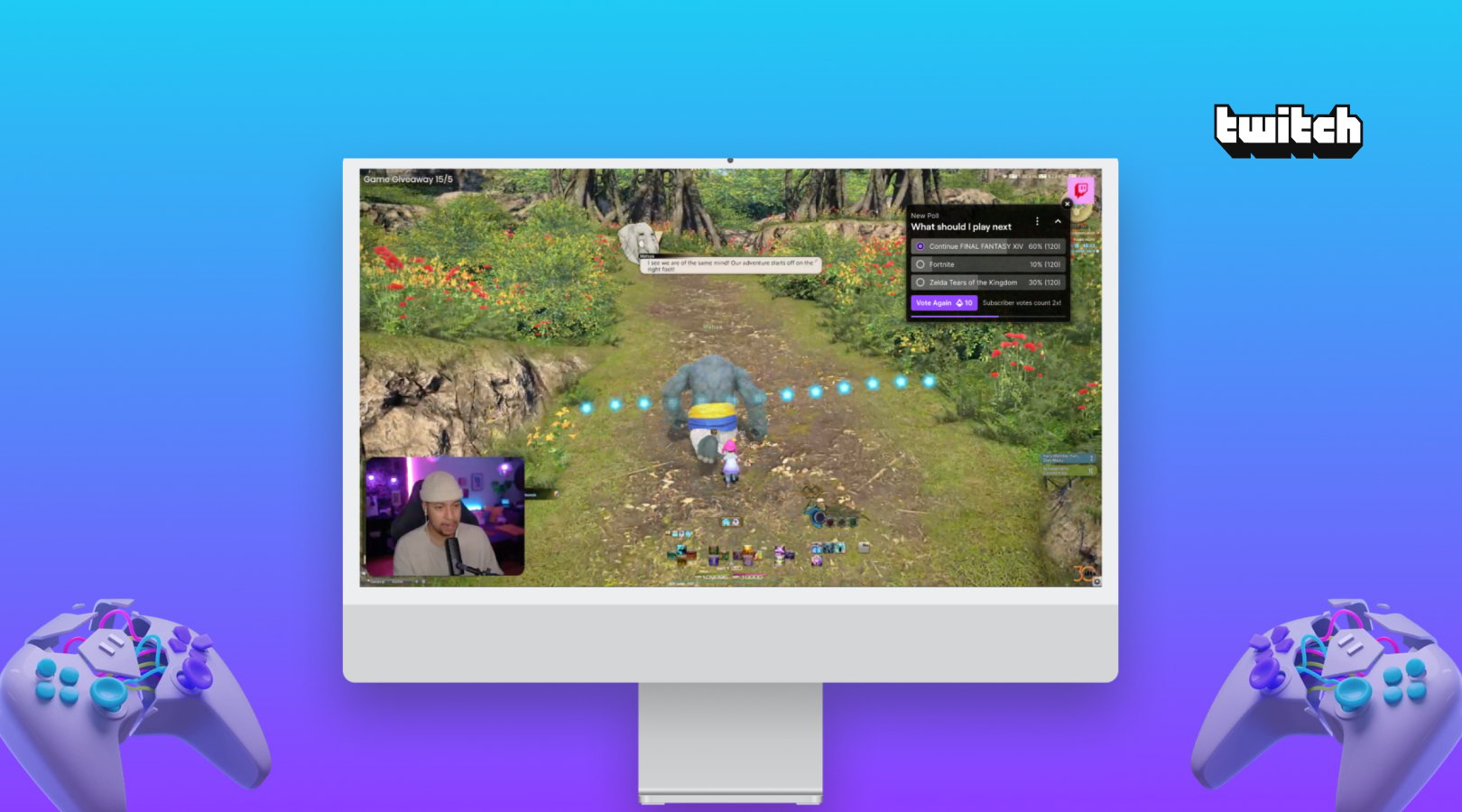
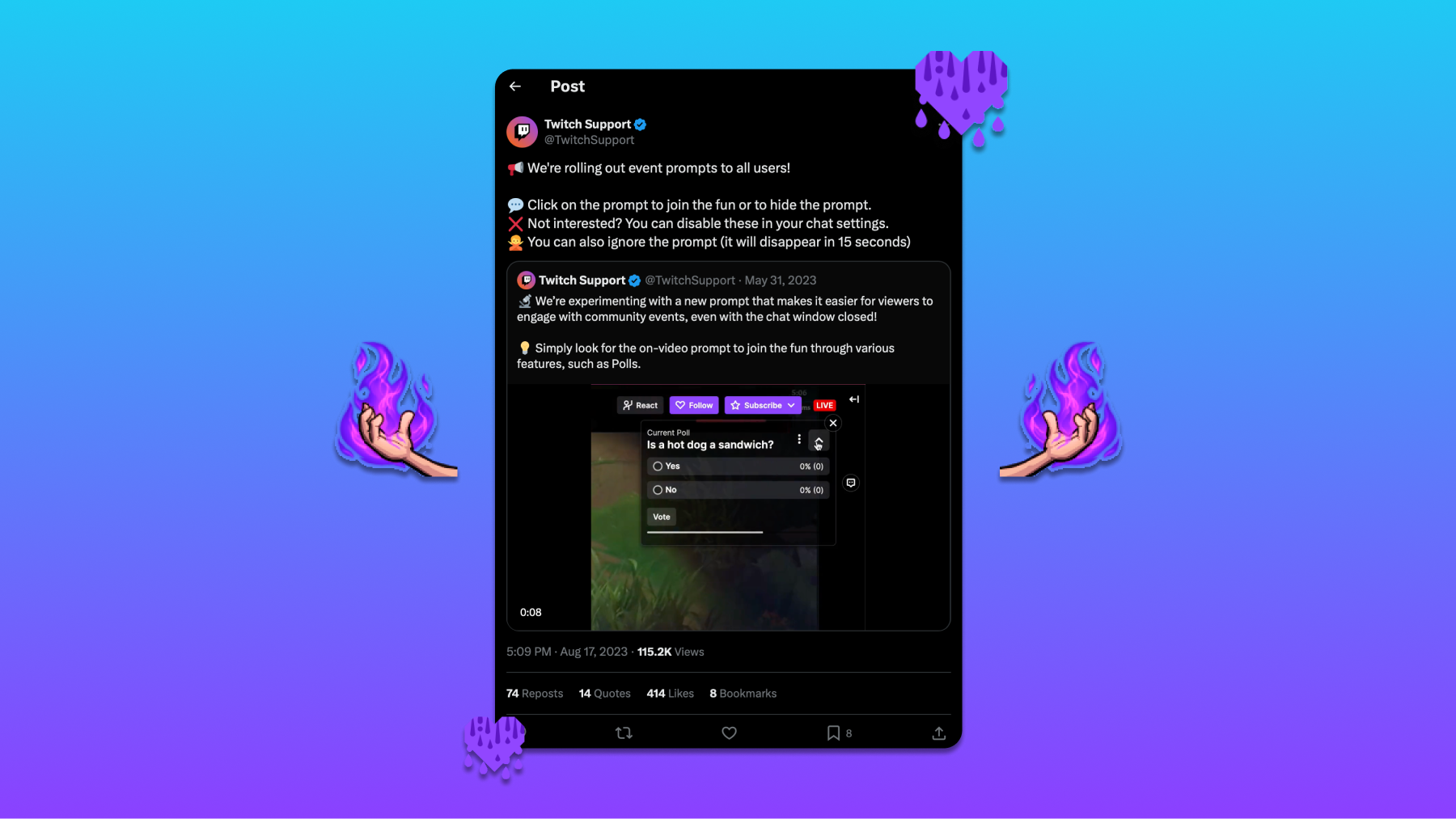
Fullscreen viewing traditionally created a terminal state for revenue. Users who maximized immersion were locked out of the monetization funnel because community features and micro-transactions required windowed mode. I led the strategy to de-couple immersion from isolation by testing whether embedding engagement as an ambient layer could preserve the flow state while opening access to revenue. This phase validated that users were not avoiding participation but were instead navigating an architectural constraint that forced a binary choice between quality watching and active connection.

Finalized design that launched

A small But Mighty Team
As the Lead Designer for Version 2, I reframed the team strategy from incremental UI updates to a systemic architectural overhaul. I owned the end-to-end execution across a three-month timeframe and managed a cross-functional team through a phased global rollout to 100% of users.
- 1 Product Manager
- 2 Engineers
- 1 Data Analyst
- 3 Product Designers

Impact and Key Findings
- The Funnel Opening: The 51.9% increase in participation rates proved that architectural barriers suppressed engagement rather than user motivation.
- Sustained Interaction: The 10.9% increase in chat messages per user demonstrated that ambient integration preserved flow state while enabling participation. Users engaged more frequently when the architecture stopped forcing a choice between viewing quality and community connection.
- The Strategic Insight: Fullscreen viewers sought simultaneous immersion and community connection. Context switching costs suppressed participation rather than user preference. Low-effort ambient interactions preserved flow state while forced exits to windowed mode disrupted the user experience.

The Problem
Measuring Constraints, Not Capacity
Fullscreen viewing suppressed monetization despite driving the highest engagement on the platform. While the team initially focused on incremental UI updates, I reframed the project as a systemic architectural investigation into participation barriers. The primary risk was destroying the immersive experience that made fullscreen valuable. We needed to prove that integrating chat and community events would reduce context switching costs without disrupting user flow. By testing ambient interactions against forced windowed mode exits, I sought to validate whether the interface itself was the primary inhibitor of revenue.
Behavioral Design Translation

Designing For Peripheral Awareness
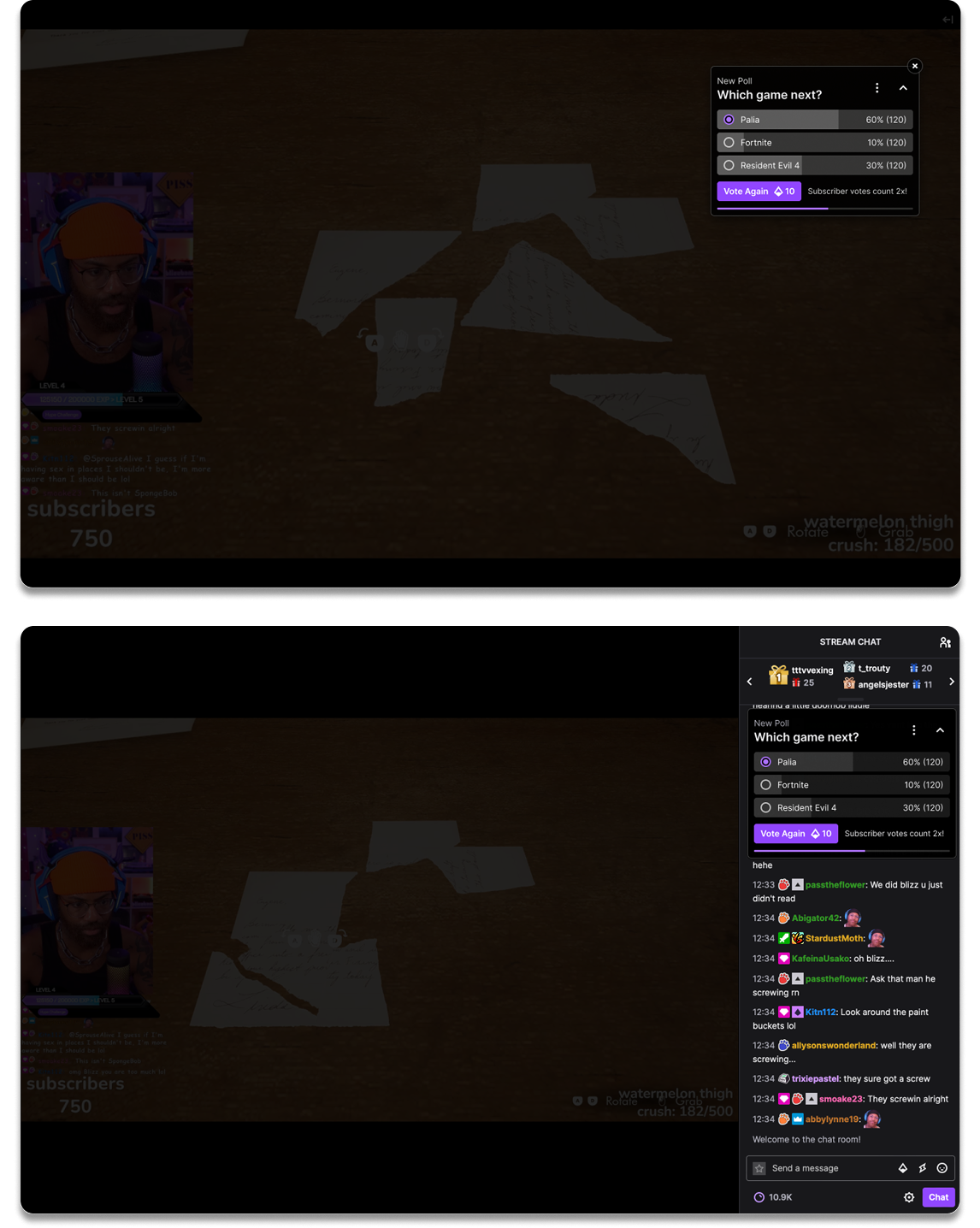
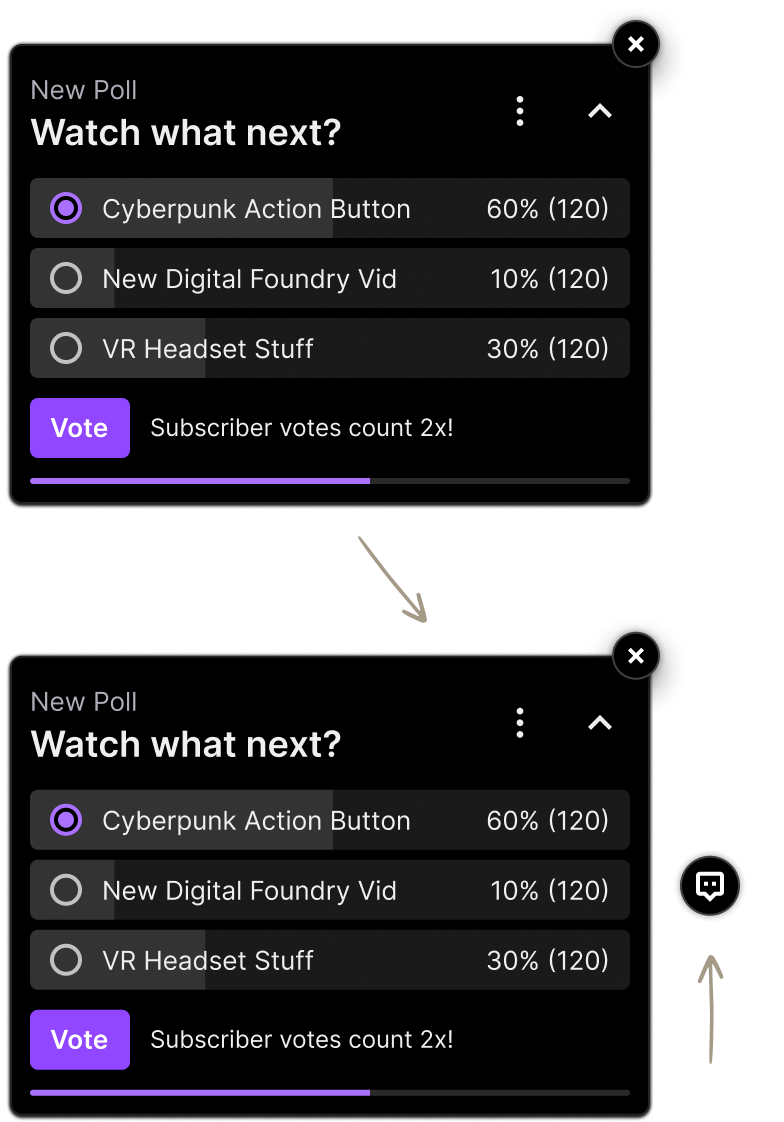
Flow Theory requires a precise visual hierarchy to ensure users remain immersed in primary content while secondary interactions stay accessible. I designed chat transparency, positioning, and auto-hide behaviors to keep viewing central and participation peripheral. This specific configuration balanced the user requirement for immersion with the platform requirement for engagement.
Translating Behavioral Insights Into Strategy
Phase 2 findings revealed exactly where users engaged and which interface elements preserved the flow state. I facilitated co-design workshops with monetization and community engagement leads to translate these behavioral insights into a Phase 3 roadmap. This collaborative process built the cross-functional conviction necessary to pursue a radical immersive chat vision and de-risk the long term engineering investment.
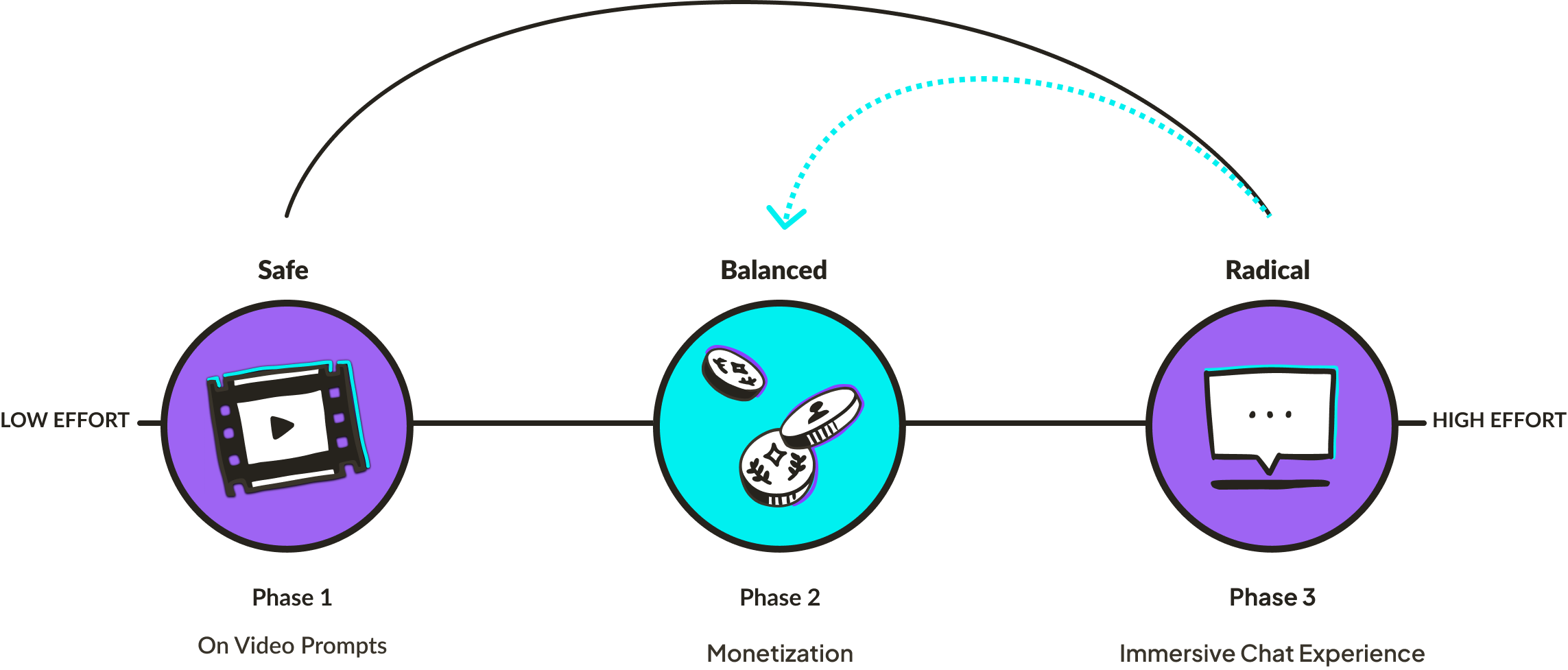

Filippos Protogeridis article on Safe vs. Radical Thinking
IMPACT
100%
User retention increase (Five-Minute-Play)
51.9%
Increase in participation rates
10.9%
Increase in chat messages per user
IMPACT

Rethinking Flow State Design
This project challenged the assumption that immersion requires isolation from community features. I discovered that Flow Theory protects the primary viewing experience without requiring the total absence of peripheral interaction. Users maintained a state of flow when chat remained ambient but experienced significant disruption when forced to exit fullscreen entirely. The architectural takeaway is the necessity of distinguishing between attention-preserving layers and attention-demanding interruptions. Monetization does not necessitate breaking immersion if the interaction model respects cognitive load. The required systemic shift is moving from binary engagement states toward a spectrum-based participation architecture.



“Building an adaptive future through deliberate insights”


Made and designed by nayeri
© 2026 All Rights Reserved

Integrating the Monetization Funnel
Most platforms treat immersion and monetization as opposing forces. What if fullscreen viewing suppressed revenue not because users rejected participation, but because the architecture forced them to choose?
TL;DR
Overview
Fullscreen viewing traditionally created a terminal state for revenue. Users who maximized immersion were locked out of the monetization funnel because community features and micro-transactions required windowed mode. I led the strategy to de-couple immersion from isolation by testing whether embedding engagement as an ambient layer could preserve the flow state while opening access to revenue. This phase validated that users were not avoiding participation but were instead navigating an architectural constraint that forced a binary choice between quality watching and active connection.
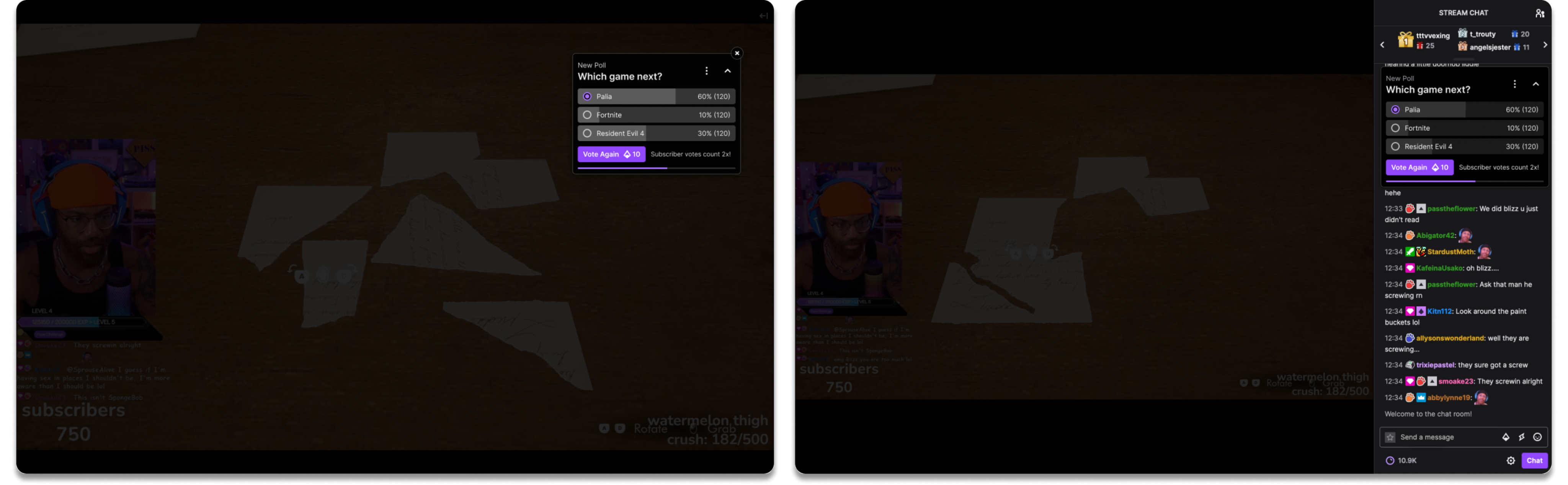
Finalized design that launched

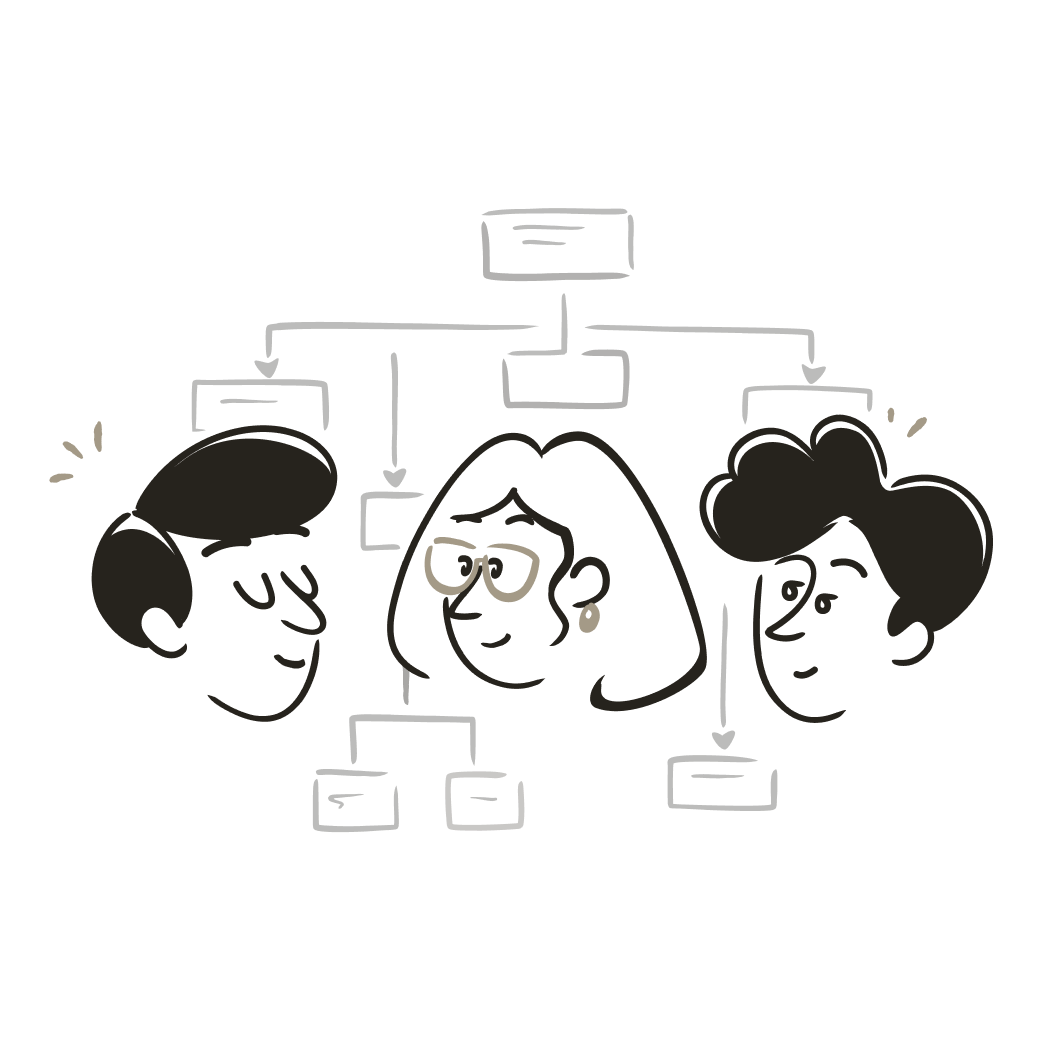
A small But Mighty Team
As the Lead Designer for Version 2, I reframed the team strategy from incremental UI updates to a systemic architectural overhaul. I owned the end-to-end execution across a three-month timeframe and managed a cross-functional team through a phased global rollout to 100% of users.
- 1 Product Manager
- 2 Engineers
- 1 Data Analyst
- 3 Product Designers
Impact and Key Findings
- The Funnel Opening: The 51.9% increase in participation rates proved that architectural barriers suppressed engagement rather than user motivation.
- Sustained Interaction: The 10.9% increase in chat messages per user demonstrated that ambient integration preserved flow state while enabling participation. Users engaged more frequently when the architecture stopped forcing a choice between viewing quality and community connection.
- The Strategic Insight: Fullscreen viewers sought simultaneous immersion and community connection. Context switching costs suppressed participation rather than user preference. Low-effort ambient interactions preserved flow state while forced exits to windowed mode disrupted the user experience.
The Problem
Measuring Constraints, Not Capacity
Fullscreen viewing suppressed monetization despite driving the highest engagement on the platform. While the team initially focused on incremental UI updates, I reframed the project as a systemic architectural investigation into participation barriers. The primary risk was destroying the immersive experience that made fullscreen valuable. We needed to prove that integrating chat and community events would reduce context switching costs without disrupting user flow. By testing ambient interactions against forced windowed mode exits, I sought to validate whether the interface itself was the primary inhibitor of revenue.
Behavioral Design Translation
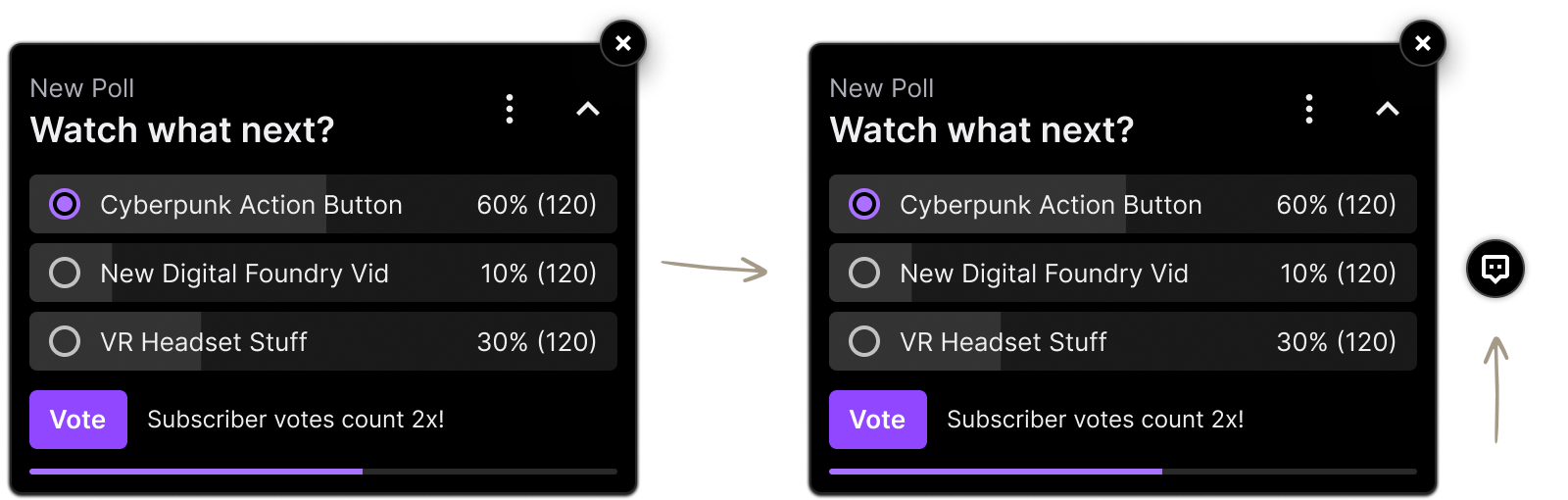
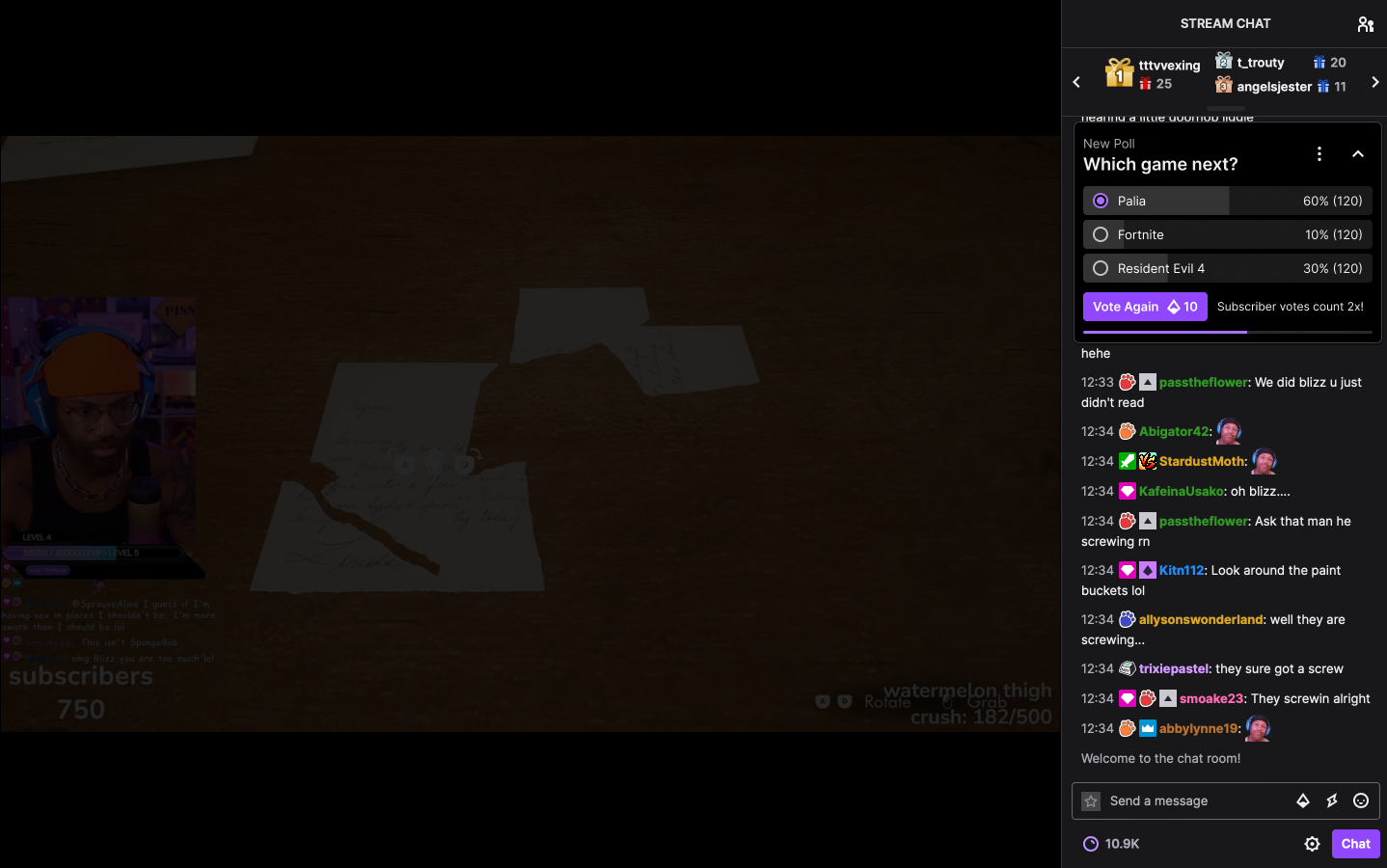
Finalized designs for priviate sharing
Designing For Peripheral Awareness
Flow Theory requires a precise visual hierarchy to ensure users remain immersed in primary content while secondary interactions stay accessible. I designed chat transparency, positioning, and auto-hide behaviors to keep viewing central and participation peripheral. This specific configuration balanced the user requirement for immersion with the platform requirement for engagement.
Low Cost Access Without Forced Commitment
Every manual action required to access chat increases the context switching cost for the viewer. I architected hover-based interactions rather than click-based toggles to reduce the cognitive load of transitioning between immersion and participation. This interaction model allowed users to sample the community layer without the psychological friction of abandoning their state of flow.
Translating Behavioral Insights Into Strategy
Phase 2 findings revealed exactly where users engaged and which interface elements preserved the flow state. I facilitated co-design workshops with monetization and community engagement leads to translate these behavioral insights into a Phase 3 roadmap. This collaborative process built the cross-functional conviction necessary to pursue a radical immersive chat vision and de-risk the long term engineering investment.
Filippos Protogeridis article on Safe vs. Radical Thinking
IMPACT
100%
User retention increase (Five-Minute-Play)
51.9%
Increase in participation rates
10.9%
Increase in chat messages per user
IMPACT
Rethinking Flow State Design
This project challenged the assumption that immersion requires isolation from community features. I discovered that Flow Theory protects the primary viewing experience without requiring the total absence of peripheral interaction. Users maintained a state of flow when chat remained ambient but experienced significant disruption when forced to exit fullscreen entirely. The architectural takeaway is the necessity of distinguishing between attention-preserving layers and attention-demanding interruptions. Monetization does not necessitate breaking immersion if the interaction model respects cognitive load. The required systemic shift is moving from binary engagement states toward a spectrum-based participation architecture.

“Architecting clarity from systemic complexity.”

Made and designed by nayeri
© 2026 All Rights Reserved
Integrating the Monetization Funnel
Most platforms treat immersion and monetization as opposing forces. What if fullscreen viewing suppressed revenue not because users rejected participation, but because the architecture forced them to choose?
TL;DR
Overview
Fullscreen viewing traditionally created a terminal state for revenue. Users who maximized immersion were locked out of the monetization funnel because community features and micro-transactions required windowed mode. I led the strategy to de-couple immersion from isolation by testing whether embedding engagement as an ambient layer could preserve the flow state while opening access to revenue. This phase validated that users were not avoiding participation but were instead navigating an architectural constraint that forced a binary choice between quality watching and active connection.
Finalized design that launched
A small But Mighty Team
As the Lead Designer for Version 2, I reframed the team strategy from incremental UI updates to a systemic architectural overhaul. I owned the end-to-end execution across a three-month timeframe and managed a cross-functional team through a phased global rollout to 100% of users.
- 1 Product Manager
- 2 Engineers
- 1 Data Analyst
- 3 Product Designers
Impact and Key Findings
- The Funnel Opening: The 51.9% increase in participation rates proved that architectural barriers suppressed engagement rather than user motivation.
- Sustained Interaction: The 10.9% increase in chat messages per user demonstrated that ambient integration preserved flow state while enabling participation. Users engaged more frequently when the architecture stopped forcing a choice between viewing quality and community connection.
- The Strategic Insight: Fullscreen viewers sought simultaneous immersion and community connection. Context switching costs suppressed participation rather than user preference. Low-effort ambient interactions preserved flow state while forced exits to windowed mode disrupted the user experience.
The Problem
Measuring Constraints, Not Capacity
Fullscreen viewing suppressed monetization despite driving the highest engagement on the platform. While the team initially focused on incremental UI updates, I reframed the project as a systemic architectural investigation into participation barriers. The primary risk was destroying the immersive experience that made fullscreen valuable. We needed to prove that integrating chat and community events would reduce context switching costs without disrupting user flow. By testing ambient interactions against forced windowed mode exits, I sought to validate whether the interface itself was the primary inhibitor of revenue.
Behavioral Design Translation
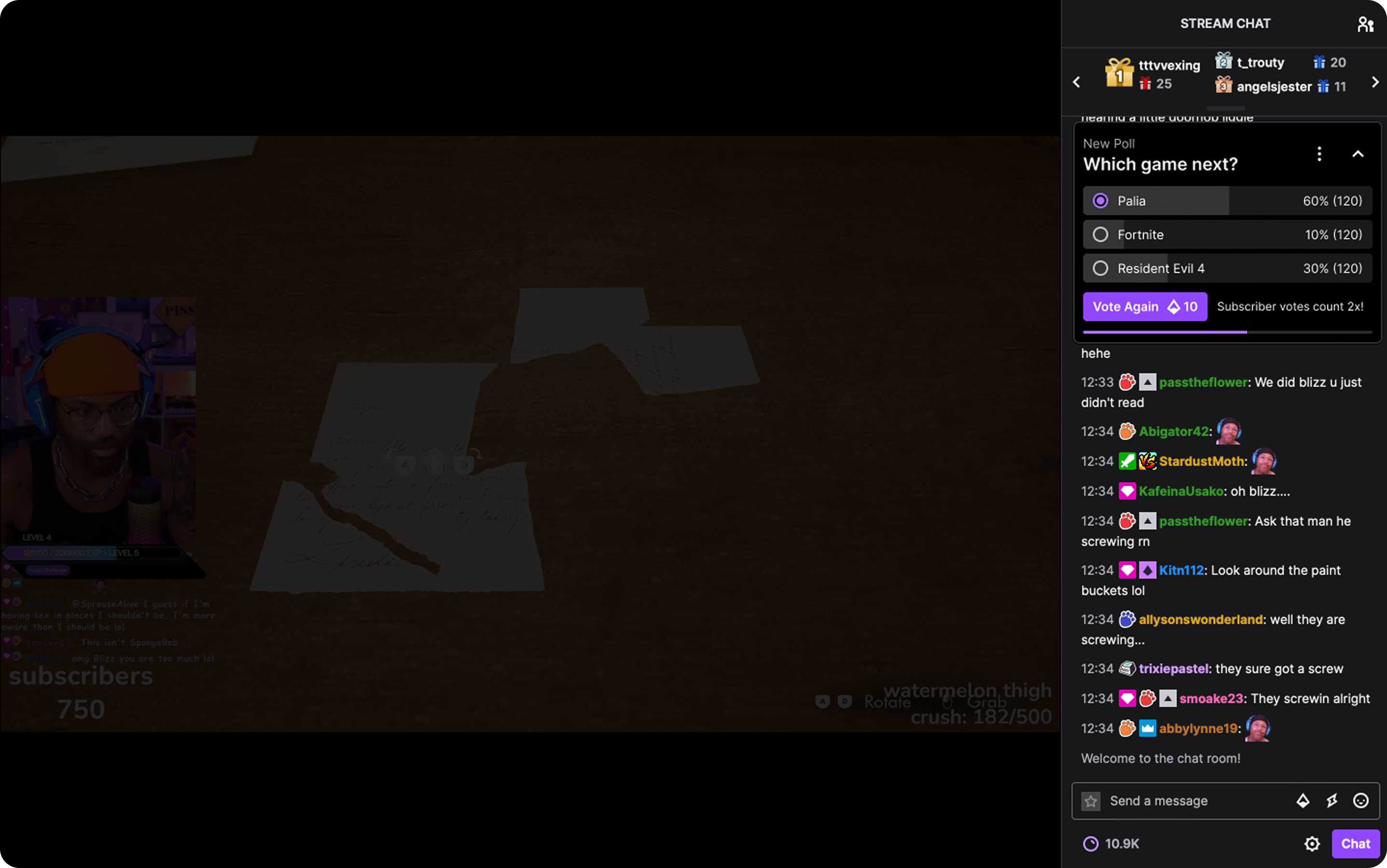
Finalized interaction design
Designing For Peripheral Awareness
Flow Theory requires a precise visual hierarchy to ensure users remain immersed in primary content while secondary interactions stay accessible. I designed chat transparency, positioning, and auto-hide behaviors to keep viewing central and participation peripheral. This specific configuration balanced the user requirement for immersion with the platform requirement for engagement.
Low Cost Access Without Forced Commitment
Every manual action required to access chat increases the context switching cost for the viewer. I architected hover-based interactions rather than click-based toggles to reduce the cognitive load of transitioning between immersion and participation. This interaction model allowed users to sample the community layer without the psychological friction of abandoning their state of flow.
Translating Behavioral Insights Into Strategy
Phase 2 findings revealed exactly where users engaged and which interface elements preserved the flow state. I facilitated co-design workshops with monetization and community engagement leads to translate these behavioral insights into a Phase 3 roadmap. This collaborative process built the cross-functional conviction necessary to pursue a radical immersive chat vision and de-risk the long term engineering investment.
IMPACT
100%
Full rollout after 3 months post-launch
51.9%
Increase in participation rates
10.9%
Increase in chat messages per user
IMPACT
Rethinking Flow State Design
This project challenged the assumption that immersion requires isolation from community features. I discovered that Flow Theory protects the primary viewing experience without requiring the total absence of peripheral interaction. Users maintained a state of flow when chat remained ambient but experienced significant disruption when forced to exit fullscreen entirely. The architectural takeaway is the necessity of distinguishing between attention-preserving layers and attention-demanding interruptions. Monetization does not necessitate breaking immersion if the interaction model respects cognitive load. The required systemic shift is moving from binary engagement states toward a spectrum-based participation architecture.
“Building an adaptive future through deliberate insights”
Made and designed by nayeri
© 2026 All Rights Reserved